Contractual Liability Allocation for Modular Radio Frequency Exposure Noncompliance in Landed Commercial Host Hardware
Modular grant pass-through rights terminate when host enclosure proximity or antenna modifications alter tested RF safety separation boundaries.


Spacing

Physical Boundaries of Modular Compliance
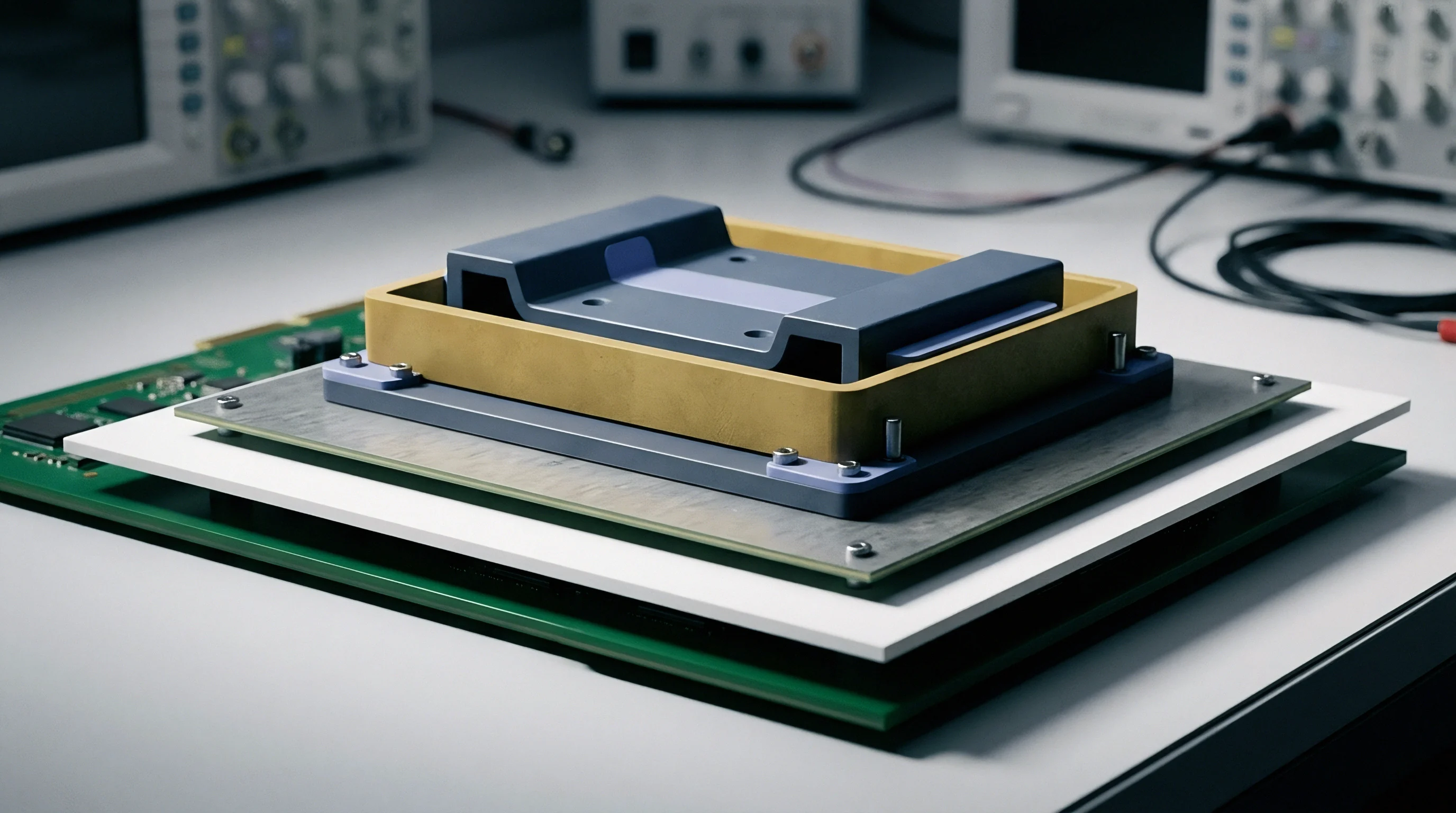
Modular radio certifications depend on fixed physical boundaries that rarely survive integration into finished host enclosures. When a transmitter secures standalone modular approval under FCC Part 15.247 or ETSI EN 300 328, the underlying test data reflects open-air test boards or standard evaluation fixtures. Those filings calculate exposure based on set separation distances ~ typically twenty centimeters for Mobile Maximum Permissible Exposure limits.
Packaging that same board inside a handheld scanner, a portable medical diagnostic housing, or a point-of-sale terminal shrinks that gap, immediately invalidating the basic power-density equations used in the original grant.
Specific Absorption Rate evaluations become mandatory whenever a radiating element sits within twenty centimeters of the human head or torso. Unless the original modular filing incorporated dedicated SAR runs on representative host geometries, modular grants from radio suppliers almost never cover spacing below five millimeters. Sourcing teams routinely treat an off-the-shelf Wi-Fi or cellular module as an umbrella certification that shields the wider product from radio frequency safety scrutiny.
In practice, that coverage lapses the moment mechanical packaging moves the antenna closer to the body than the distance defined on the grant.
Regulatory Distance Rules and Evaluation Thresholds
Different jurisdictions draw sharp lines between calculated field exposure and localized tissue absorption. Under United States Federal Communications Commission rules in KDB 447498 D04, devices transition from power density formulas to direct SAR testing based on operating frequency, output power, and duty cycle. Innovation, Science and Economic Development Canada applies RSS-102 Issue 5, using strict power-versus-distance lookup tables to trigger SAR exclusion thresholds.
In the European Union, harmonized standards EN 50663 and EN 62209-15 set the compliance criteria needed to satisfy Article 3.1a of the Radio Equipment Directive 2014/53/EU.
| Regulatory Jurisdiction | Applicable Safety Standard | Separation Threshold for MPE | Portable SAR Evaluation Trigger | Co-Location Assessment Rule |
|---|---|---|---|---|
| United States (FCC) | 47 CFR 1.1310 / KDB 447498 D04 | 20 cm or greater | Power dependent at < 20 cm | Summation of exposure ratios |
| Canada (ISED) | RSS-102 Issue 5 / IEC 62209 | 20 cm or greater | Table-based power threshold | Combined field evaluation |
| European Union (CE) | EN 50663 / EN 62209-15 | 20 cm for general public | 20 mW power threshold at < 20 cm | Total exposure ratio calculation |
| Japan (MIC / Giteki) | Radio Regulatory Radio Law Art 14-2 | 20 cm nominal | Mandatory at < 20 cm for mobile | Field summation method |
Internal antenna selection reshapes the transmitter’s near-field energy distribution. Modular filings specify maximum allowable gains for specific antenna styles ~ typically patch, inverted-F, or dipole elements. Substituting an antenna with higher gain than the grant permits breaches the certification immediately.
Similarly, routing an antenna trace across the host motherboard can induce localized magnetic field peaking, causing a unit to fail SAR limits even when conducted power levels match factory calibration sheets.
Multiple transmitters operating inside the same enclosure present an additive exposure problem. Packing Bluetooth alongside a 5 GHz Wi-Fi radio and a 4G LTE modem creates simultaneous transmission conditions. Under Federal Communications Commission procedures, the host must satisfy a Total Exposure Ratio calculation to confirm that aggregate emissions remain under public exposure thresholds.
Because component vendors only evaluate their own silicon in isolation, the burden of proving that co-located fields do not exceed cumulative limits falls squarely on the final system integrator.
Procurement teams often take pre-approved modular grants at face value without checking mechanical clearances against the underlying test files. Yet downstream product configurations lose their regulatory cover the moment host geometry shrinks separation distances below the grant thresholds, regardless of whether factory firmware remains untouched.


Integration
Mechanical Constraints and Field Distortion
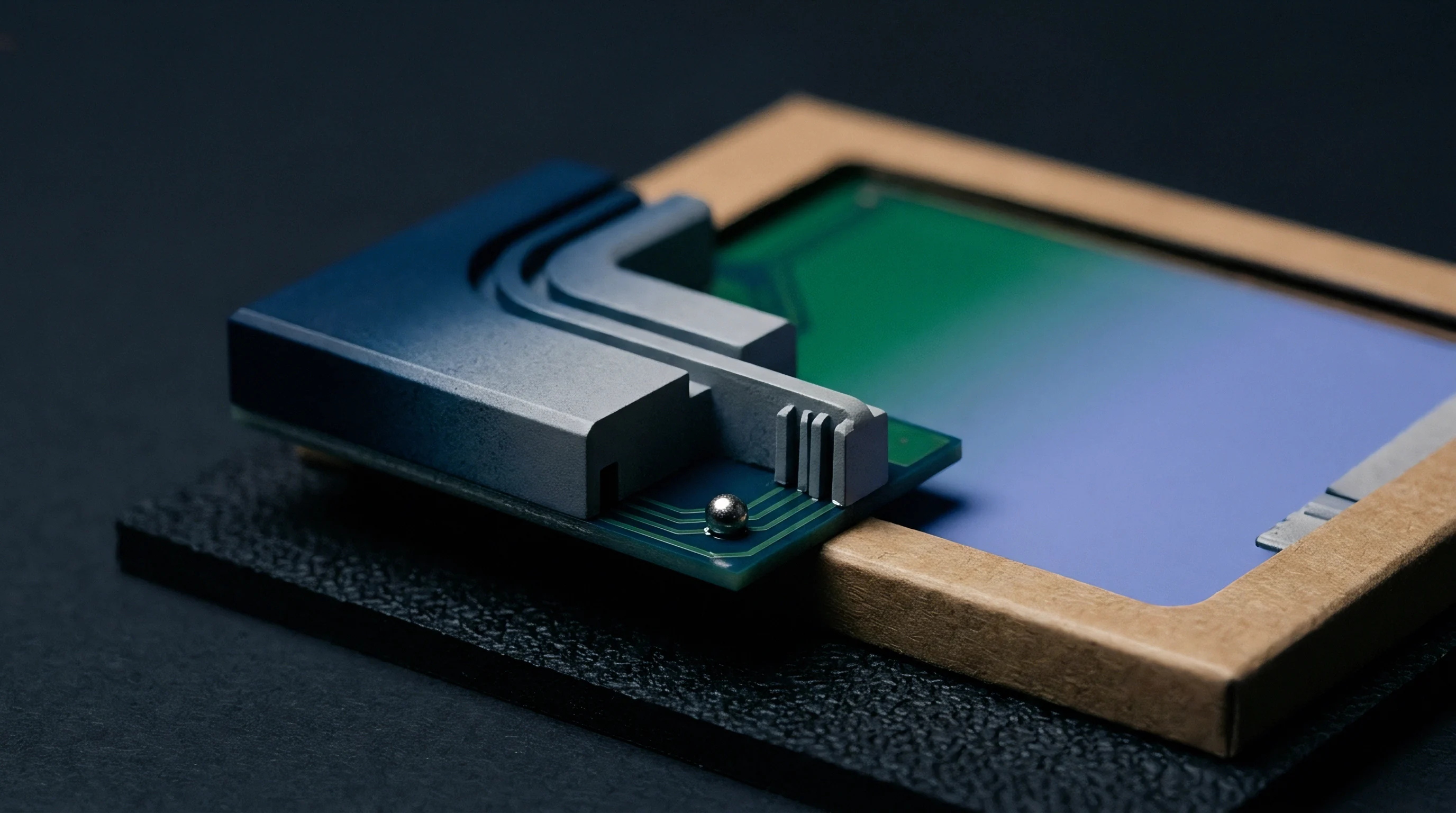
Chassis materials distort the electromagnetic fields emitted by an integrated radio. Metal structural ribs, internal ground planes, battery casings, and high-density display panels bend and reflect RF energy, replacing clean isotropic patterns with intense localized hot spots. A module that sailed through open-air power-density checks can fail SAR thresholds once tucked against a copper heat pipe or a stamped battery shield inside a compact housing.
Plastic enclosures present their own challenges through dielectric loading, which pulls antenna resonant frequencies off target. When an internal trace or flexible printed circuit antenna detunes against adjacent resin walls, the radio’s power management firmware often increases drive current to maintain link quality. That automatic power compensation routinely drives localized absorption over safe exposure thresholds.
Capturing these integration shifts requires testing the host hardware in its final, fully assembled state.
Peak localized SAR values increase dramatically when internal metallic components rest within six millimeters of a modular trace antenna.
A host product’s firmware profile often conflicts with the duty cycle assumptions baked into the original modular test report. For example, a cellular module might hold certification based on a twelve point five percent time-averaged duty cycle appropriate for standard frame-based voice operations. If the host system drives that module to transmit steady telemetry bursts or continuous video streams, the operational duty cycle jumps toward ninety percent.
That software shift dramatically raises the time-averaged energy absorbed by nearby tissue, leaving the landed hardware completely noncompliant.

Host Electromagnetic Failure Modes
Host integration failures typically trace back to a handful of known physical and operational mechanisms during qualification testing.
- Antenna Detuning Hotspots occur when host plastic enclosure materials alter antenna impedance, shifting radio peak radiation into close proximity with user touch points.
- Simultaneous Transmission Spikes happen when overlapping transmit slots from independent Bluetooth and Wi-Fi modules exceed cumulative exposure limits.
- Chassis Resonance Amplification arises when internal structural metal framing re-radiates radio frequency energy toward external host surfaces.
- Firmware Power Table Overrides develop when host software loads unverified power settings that exceed the granted modular factory settings.
- Thermal Dissipation Drift occurs when rising operational temperatures shift internal amplifier output stages into non-linear, high-power operating states.
Modular grant documentation details rigid installation rules covering minimum clearances, maximum trace routing lengths, and required ground plane dimensions. Ignoring these constraints transforms the host integrator into the de facto transmitter manufacturer under the law. In the United States, disregarding grant instructions immediately voids the modular equipment authorization, reclassifying the finished unit as an uncertified intentional radiator vulnerable to border seizures and regulatory penalties.
When a host design brings the internal antenna closer to the case surface than the grant allows, lab verification in an accredited SAR chamber becomes unavoidable. Profiling electric field gradients in a liquid tissue phantom pinpoints hot spots before production tooling is finalized. Changing enclosure plastics after initial testing triggers the same requirement: any shift in resin composition or wall thickness alters dielectric loading, which can relocate the peak absorption zone entirely.
A module operating inside a tight host enclosure requires host-level assessment whenever physical geometry differs from the modular grant evaluation board setup.


Exposure

Jurisdictional Sanctions and Noncompliance Impact
Commercial hardware arriving at international entry ports faces immediate detention if its RF compliance dossier fails scrutiny. Customs inspectors across North America, the European Union, and East Asia routinely match incoming equipment model numbers against the original modular filings cited in the paperwork. An invalid modular pass-through triggers automatic quarantine, leaving inventory trapped in customs warehouses and running up daily storage fees.
Market surveillance groups also pull production units directly from store shelves for independent verification. In France, the spectrum authority ANFR runs continuous compliance campaigns targeting commercial consumer hardware. When an imported host exceeds SAR limits, regulators have direct authority to mandate product recalls, halt retail distribution, and force manufacturers to push emergency firmware updates that dial back transmit power ~ often degrading product performance in the process.
| Jurisdiction | Enforcement Agency | Primary Administrative Action | Financial Penalty Range | Market Remediation Requirement |
|---|---|---|---|---|
| United States | FCC Enforcement Bureau | Notice of Apparent Liability | Up to 150,000 USD per violation day | Forced product recall or stop-sale |
| European Union | National Market Surveillance (e.g. ANFR) | Article 40 RED Non-compliance Notice | Varies by member state (up to 50,000 EUR) | Public recall or power-capping update |
| Canada | ISED Spectrum Management | Stop Sale / Customs Detention | Up to 25,000 CAD per offense | Mandatory hardware modification |
| Japan | Ministry of Internal Affairs (MIC) | Giteki Mark Revocation | Criminal fines up to 1,000,000 JPY | Immediate withdrawal from retail channels |
Fines for importing noncompliant radio hardware mount quickly across multi-territory rollouts. The total cost rarely stops at statutory penalties; brand owners routinely face channel de-listing, cancelled enterprise contracts, and demands for accelerated repayment from trade lenders. Regardless of whatever indemnities a module vendor provides, legal accountability for placing noncompliant goods into a market rests entirely with the importer of record.

Remediation Protocol Sequence
Containing a host-level exposure failure requires quick, systematic intervention to limit commercial liability and restore market access.
- Halt all international logistics shipments and quarantine host hardware held in regional distribution hubs.
- Extract operational firmware from affected production units to verify real-world transmitter power output tables.
- Submit fully assembled host units to an accredited testing laboratory for SAR and radiated power measurement.
- Evaluate physical modification options including internal RF shielding, antenna repositioning, or power back-off algorithms.
- File updated certification paperwork with Telecommunications Certification Bodies or execute Permissive Change documentation.
- Deploy verified firmware updates across active field assets to enforce regulatory power limits.
Noncompliance under Radio Equipment Directive Article 3.1a triggers mandatory market withdrawal notices across all twenty-seven European Union member states simultaneously.
Sizing commercial exposure involves weighing the cost of physical redesign against the price of emergency firmware rollbacks. Choking back transmitter power via software may resolve safety noncompliance, but the resulting drop in link budget can breach contractual range commitments to customers. On the other hand, re-tooling plastics or re-laying boards introduces months of chamber testing, delays deliveries, and risks missing fixed seasonal market windows.
Shipping uncertified commercial hardware into regulated markets exposes host importers to immediate customs forfeiture and irreversible brand degradation.

Warranty

Limits of Pass-Through Modular Grants
Component purchase agreements almost always include standard boilerplate guaranteeing that delivered goods comply with relevant statutory regulations. Hardware buyers often read this as an end-to-end guarantee that covers their finished product. In the background, however, radio suppliers tailor their warranties to confirm compliance only when the part operates under the exact layout and spacing documented in their integration guide.
Dropping the radio into an enclosure that shifts trace layout, grounding, or working separation immediately voids those supplier warranties. Standard commercial terms explicitly disclaim warranties of merchantability and fitness for a particular purpose. When an RF exposure violation surfaces later, the integrator discovers that the master purchase agreement shields the component vendor from host-level failures.
Modular certificates are conditional operating licenses, not universal hall passes. They detail maximum allowable antenna gains and minimum working distances. As soon as a host enclosure places the antenna closer to human tissue than those terms allow, the legal obligation to prove safety transfers entirely to the host manufacturer.

When Does a Modular Grant Expire during Integration?
A modular grant loses legal validity the moment host integration breaches an explicit operating restriction on the certificate. Mechanical assembly into an enclosure operating within twenty centimeters of the body voids coverage immediately, unless the filing specifically tested portable SAR conditions. The table below details the permissive change pathways used to regularize status under United States and Canadian regulatory frameworks.
| Permissive Change Class | Triggering Host Integration Condition | Laboratory Testing Requirement | Filing and Approval Route |
|---|---|---|---|
| Class I Permissive Change (C1PC) | Minor component changes, no impact on RF limits | Internal verification testing | No formal regulatory filing required |
| Class II Permissive Change (C2PC) | Antenna change, minor enclosure proximity changes | Spurious emissions and SAR spot checks | TCB review and formal grant update |
| Class III Permissive Change (C3PC) | Software Defined Radio power changes | Software security and exposure evaluation | Formal regulatory filing and approval |
| New Equipment Authorization | Co-located radios, reduced distance under 5 mm | Full host SAR and EMC chamber testing | New FCC ID / ISED certification filing |
Commercial supply contracts must state clearly which party holds responsibility for preparing and filing Permissive Changes. If an industrial design forces a Class II Permissive Change to accommodate tighter antenna clearances, the purchase contract needs to define who covers chamber fees and TCB review invoices. Without those terms in writing, the host company absorbs every unbudgeted qualification invoice.
Standard regulatory compliance warranties in component purchase orders offer zero protection against host-level SAR failures caused by mechanical enclosure proximity.
A modular radio grant functions as a conditional component license that expires the moment host integration alters the tested physical boundary conditions.
Supply agreements require clean technical definitions for regulatory fault. A comprehensive contract sets enforceable limits for allowable antenna designs, peak output powers, and mandatory vendor assistance during host-level filing processes. The following clause fixes supplier liability for regulatory filing costs created by modular grant restrictions:
Supplier shall defend, indemnify, and hold harmless Buyer against all regulatory fines, recall expenses, and chamber re-testing costs arising from any RF exposure noncompliance caused by Supplier modular firmware defects, undisclosed transmit power tolerances, or invalid modular grant conditions.


Indemnity

Commercial Liability Allocation Models
Managing exposure to radio frequency noncompliance requires explicit indemnification terms between the module maker and the system integrator. Standard electronics manufacturing contracts focus on product defects and intellectual property disputes, bypassing regulatory market access problems. When an import shipment gets held at the border over an invalid modular grant pass-through, the resulting losses span stranded inventory, warehouse fees, and customer breach-of-contract penalties.
Suppliers routinely attempt to limit indemnity liabilities to the purchase value of the modules shipped under the immediate purchase order. That cap creates severe exposure for the host manufacturer: a coordinated recall of finished goods can cost a hundred times what the underlying wireless chips were worth. Balanced contracts establish separate, un-capped allocations or dedicated liability sub-caps for regulatory recalls and market access failures.
Limiting supplier liability to the purchase value of the radio module leaves ninety-eight percent of host product recall costs completely unbacked.
Pinpointing the root cause of an RF safety violation requires technical forensics. Disputes often turn on whether noncompliance stems from enclosure geometry, antenna trace design, and software integration, or from undocumented module firmware routines, factory calibration drift, and unstated grant conditions. Setting clear evidentiary standards in the contract determines which party covers the resulting administrative and lab costs.

Indemnity Trigger Decision Checklist
Securing contractual protection against border delays and market actions requires concrete, objective trigger criteria.
- Firmware Power Variance Clauses trigger supplier indemnity when internal module firmware emits transmit power exceeding the stated factory calibration specs.
- Grant Misrepresentation Triggers activate financial recourse if the supplier modular grant carries un-disclosed restrictions that invalidate host integration.
- Customs Seizure Cost Allocation assigns immediate demurrage, port storage, and regulatory inspection fees directly to the component vendor upon shipping holds.
- Recall Expenses Coverage obligates the module vendor to reimburse hardware recall logistics, retail vendor processing fees, and end-user notification costs.
- Chamber Engineering Subsidies mandate vendor payment for external accredited test laboratory hours required to execute Class II Permissive Changes.
The matrix below outlines financial exposure categories and typical cost-allocation splits negotiated between commercial hardware integrators and modular radio suppliers.
| Cost Exposure Category | Typical Financial Magnitude | Standard Vendor Term Position | Negotiated Integrator Protection Term |
|---|---|---|---|
| Customs Detention & Demurrage | 1,000 to 5,000 USD per day | Fully disclaimed by vendor | Full vendor liability upon grant error |
| Accredited Chamber Testing Fees | 15,000 to 45,000 USD per run | Integrator responsibility | Split cost based on root cause audit |
| Product Recall Logistics | 100,000 to 2,000,000+ USD | Capped at module purchase price | Carve-out from liability cap |
| Marketplace De-Listing Fines | 50,000 to 250,000 USD | Disclaimed as consequential loss | Direct damages allocation clause |
Contractual recovery options dwindle rapidly if a component vendor drops product support or enters insolvency while a global host recall is underway.


Covenant

Pre-Landed Verification and Governance
Procurement teams need formal verification gates in place long before volume shipments arrive at destination customs points. Accepting simple paper certificates without auditing test lab credentials, setup photographs, and grant limitations leaves an importer wide open to regulatory enforcement. A functional pre-shipment gate requires obtaining full accredited test files, raw SAR distribution plots, and the supplier’s internal firmware power configuration tables.
Quality agreements should establish lot-by-lot verification of transmitter output during production. Transmit power tolerances drift across manufacturing batches as component values shift within amplifier stages and RF front-end filters. A lot that trends two decibels hotter than nominal factory calibration can push an otherwise compliant host enclosure over SAR thresholds.
Setting rigid factory output acceptance limits stops marginal hardware before it reaches the final assembly line.
Host manufacturers must also secure change-notification covenants requiring advance notice of any hardware, silicon, or firmware revisions. Radio suppliers frequently revise RF front-end silicon or update driver firmware to clear up component shortages or improve line yields. These internal modifications alter harmonic radiation profiles and output power characteristics, rendering host-level compliance assessments invalid without the host integrator’s knowledge.
Auditing finished production units inside an accredited chamber provides final confirmation before mass distribution begins. Pulling random samples from early production lots for full SAR and radiated spurious emissions sweeps catches host packaging problems before export paperwork is filed. Backing engineering controls with firm legal covenants keeps commercial shipments moving through ports while protecting the balance sheet and brand standing in international markets.