Offline Elliptic Curve Signature Verification Protocols for Custom Label Transponders
Offline transponder signature validation relies on compact elliptic curve keys, efficient memory framing, and compliant reader radio power limits.


Primitive
Asymmetric cryptography on passive or semi-passive radio transponders shifts execution from cloud backends to the local air interface. Operating under strict energy-harvesting budgets and small storage footprints, custom label transponders running offline public-key operations require tight synchronization between cryptographic primitives, scalar multiplication timing, and reader field duration.

Curve Selection Dynamics
Mathematical curve structure determines key length, compute time, and frame payload size. Prime-field curves like secp256k1 and NIST P-256 provide 128-bit security using 256-bit keys. Edwards curves such as Ed25519 speed up signature generation and validation while keeping microcontroller memory use low, reducing transponder energy draw during backscatter transmissions.
Minimizing clock cycles is critical on power-constrained transponders. Point addition and doubling in prime fields draw substantial power on eight-bit or sixteen-bit coprocessors. Implementing a Montgomery ladder maintains constant-time scalar multiplication, cutting side-channel vulnerability while keeping the silicon footprint small.
Field reader units operating at 915 MHz achieve complete signature extraction within 42 milliseconds when verifying a 64-byte compressed ECC payload.

Signature Overhead Comparisons
Standard ECDSA signatures generate two 256-bit integers, designated as r and s, yielding a 64-byte payload. Storing raw signatures alongside public keys and full digital certificates quickly exhausts available space, since user memory on label ICs rarely exceeds 2048 bits.
| Curve Standard | Public Key Size (Bytes) | Signature Overhead (Bytes) | Transponder Memory Footprint (%) | Reader Math Execution Time (ms) |
|---|---|---|---|---|
| NIST P-256 | 64 (uncompressed) | 64 | 50.0 | 14.2 |
| secp256k1 | 33 (compressed) | 64 | 37.8 | 12.8 |
| Ed25519 | 32 | 64 | 37.5 | 8.6 |
| Brainpool P-256r1 | 64 (uncompressed) | 64 | 50.0 | 18.5 |
| Calculated using standard 2048-bit user memory transponder ICs at 25 degrees Celsius. | ||||
Offline cryptographic verification follows a strict sequence across the air interface, structured to prevent session timeouts during physical scanning passes.
- The field reader projects an RF continuous wave to activate the transponder IC and retrieve the EPC identifier.
- The reader issues a block read command targeting the specified memory bank containing the compressed ECC signature.
- The transponder transmits the stored signature components and public key index back via load modulation.
- The offline reader fetches the corresponding public key from its internal encrypted secure element using the retrieved index.
- The reader computes the hash of the tag identifier and validates the signature scalar values locally without external network access.
Elliptic curve selection balances reader compute speed against the byte limits of the transponder memory architecture.


Framing
Binary layouts inside label transponder memory must comply with radio frequency identification standards. ISO/IEC 18000-63 and ISO/IEC 14443 Type A partition memory into distinct logical banks, requiring explicit offset handling so cryptographic payloads do not disrupt standard inventory sweeps.

Data Structure in User Memory
RFID memory layouts isolate the Electronic Product Code from user memory. Storing signatures in user space requires a standardized header that specifies the cryptographic suite identifier, key index, and compression format.
Without structured memory mapping, offline readers cannot resolve signature boundaries efficiently. Scanners must read contiguous memory blocks to maintain fast scan rates, as fragmented signature data adds read cycles and risks transaction failures on high-speed sorting belts or portal gates.
Substrate bending exceeding a three-millimeter radius causes impedance mismatches that degrade signal amplitude in flexible custom labels.

ISO Standard Cryptographic Suites
International standards define security suites for air interface communications. ISO/IEC 29167-19 specifies ECDSA-256 parameters for passive transponders, ensuring interoperability across multi-vendor hardware without proprietary encoding layers.
Label architectures frequently use truncated keys or implicit certificate schemes like ECQV to meet strict payload limits. Implicit certificates merge the public key and identity data into a single structure, halving the required storage space.
- Buffer Overflow Exceptions occur when signature decoding routines write beyond allocated memory boundaries during frame assembly.
- Tearing Artifacts surface when RF field power collapses mid-write, leaving incomplete cryptographic keys inside non-volatile memory.
- Bit Flipping Defects arise from radiation exposure or dielectric breakdown, corrupting stored public key indexes.
- Header Mismatch Faults happen when readers receive unknown suite selection codes, terminating offline processing immediately.
Ignoring memory boundary offsets leads to corrupted reads that present identically to transient RF interference.


Stamp
Converting silicon die into finished label packaging introduces material variations that alter RF performance. Inlay substrates, conductive inks, and adhesives shift antenna impedance, requiring post-production tuning to maintain link margins under continuous RF excitation.

Substrate Integrity and Antenna Matching
Label geometry directly affects read range and power transfer efficiency. Bending, stretching, or moisture absorption alters inlay resonance, dropping harvested voltage below the threshold needed for non-volatile memory reads.
The matching network between the transponder IC and antenna traces must account for the dielectric properties of the mounting surface. Deploying labels onto metal containers or liquid packaging requires dedicated standoff layers to preserve tuning.

Is Implicit Certificate Validation Feasible on Low-Memory Transponder Substrates?
Implicit certificates reduce stored signature payloads to 64 bytes. The reader reconstructs the transponder public key directly from the implicit certificate using a trusted root key held in local memory, removing the need to store full certificate chains on the tag.
| Regulatory Body | Standard / Clause | Maximum Output Power | Occupied Bandwidth | Mandatory Sample Count |
|---|---|---|---|---|
| FCC (USA) | Part 15.225 / 15.247 | 1.0 Watt ERP | 500 kHz | 3 units |
| ETSI (Europe) | EN 300 220-1 / EN 300 328 | 500 mW ERP | 200 kHz | 4 units |
| SRRC (China) | Micro-power Short Range | 10 mW ERP | 125 kHz | 5 units |
| Giteki (Japan) | ARIB STD-T108 | 250 mW ERP | 200 kHz | 3 units |
Selecting physical substrates requires evaluating environmental resilience alongside high-frequency electrical behavior.
- Dielectric Stability defines the variation in dielectric constant across operating temperatures from -20 to +70 degrees Celsius.
- Mechanical Shear Resistance measures the label backing performance under continuous industrial friction.
- Adhesion Integrity tracks chemical bond retention when labels encounter solvents or environmental humidity.
- RF Resonance Deviation sets the acceptable frequency shift range before backscatter power drops below operational limits.
According to ETSI EN 300 220-1 Clause 7.8.2, radiated spurious emissions from field reader units must remain below -36 dBm across the 470 MHz to 862 MHz frequency band.
Hardware designs must comply with radiated spurious limits directly to prevent rejections during regulatory market filings.


Handshake
Air interface protocol timing dictates throughput in automated sorting and inspection lines. Field readers must finish inventory discovery, memory extraction, and cryptographic validation before the transponder leaves the antenna radiation beam.

Air Interface Timings
Backscatter data rates depend on the configured modulation scheme and subcarrier frequency. Under ISO/IEC 18000-63 UHF standards using Miller or FM0 modes, sorting lines operating at three meters per second leave an interrogation window of under 100 milliseconds. In that interval, the reader must read 1024 bits of data, compute the elliptic curve validation, and register the pass/fail outcome.
Multi-roundtrip cryptographic exchanges risk dropped frames during rapid physical transit. Pipelined reader firmware mitigates this by caching incoming transponder payloads while processing current mathematical operations.
Offline readers must complete complete cryptographic evaluation within 35 milliseconds to support conveyor line movement speeds of 2.5 meters per second.

Reader Pre-Processing Workflows
Scanners split processing tasks between an FPGA and a host microprocessor. The FPGA demodulates raw baseband signals into clean bitstreams, while the microprocessor handles the multi-precision integer arithmetic for scalar point multiplication.
Master keys stay protected inside secure elements certified to FIPS 140-3 Level 3 or Common Criteria EAL5+. These tamper-resistant chips zero their internal key memory upon detecting physical probing or side-channel manipulation.
- Public Key Manifest containing trusted authority certificates formatted as raw binary blobs.
- Validation Parameter Table detailing allowed curve algorithms, hash functions, and truncation lengths.
- Device Calibration Certificate confirming RF power output calibration against regional standards.
- Audit Trace Log recording signed verification timestamps, tag identifiers, and pass/fail metrics.
System designs must balance RF power output against handheld battery thermal limits during continuous high-density scanning passes.


Expense
Commercializing offline label scanning hardware requires navigating regulatory test queues, laboratory fees, and regional certifications. Total compliance budgets cover radio grants, RF exposure testing, and local representation alongside early pre-compliance lab scans.
Chamber Qualification Hours
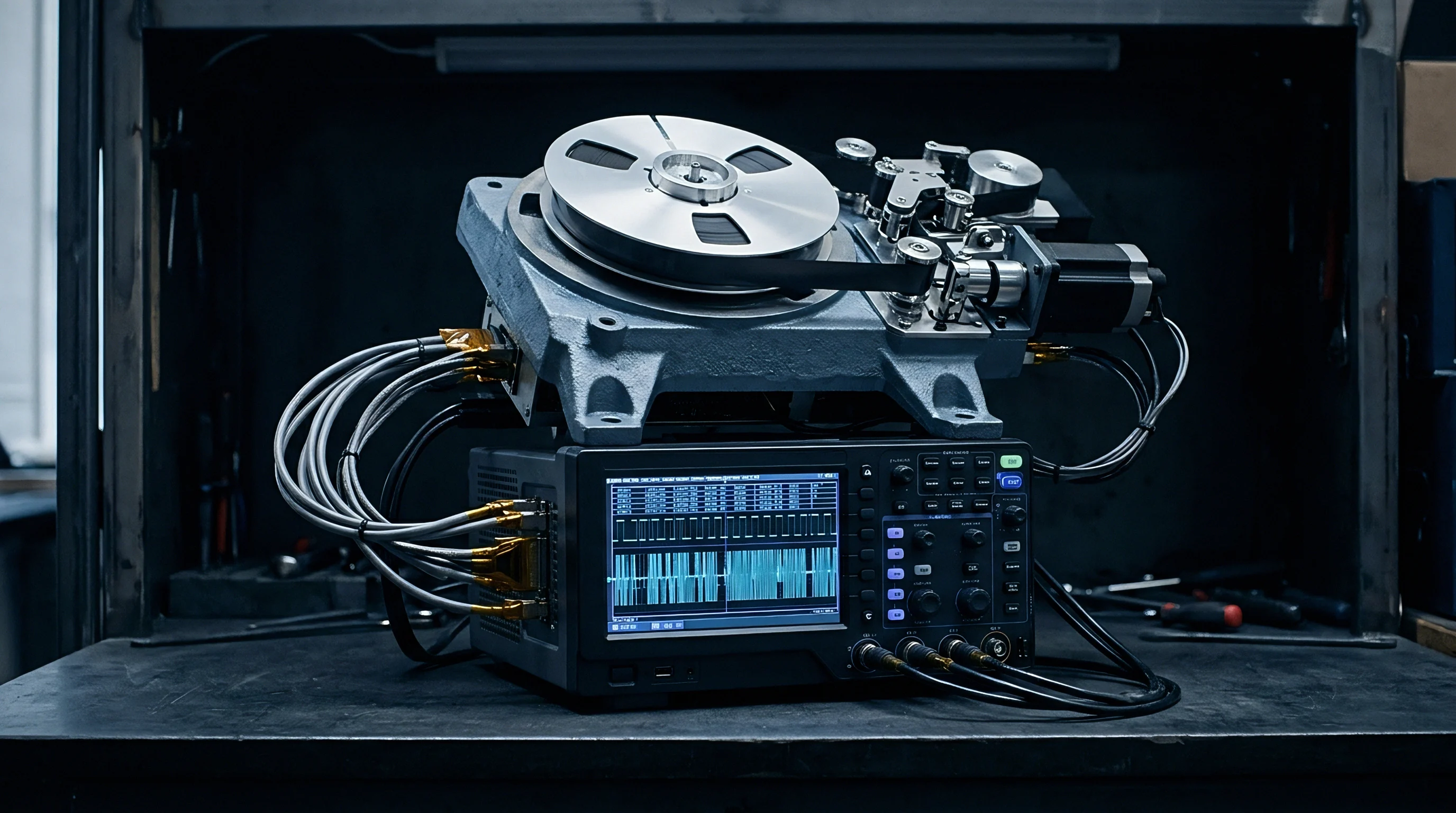
Anechoic chamber testing measures radiated emissions and radio immunity under active transmission, running between 250 and 400 USD per hour at accredited test sites. Handheld readers executing continuous public-key calculations draw sharp peak currents, producing power rail ripple that appears as spurious spectral emissions.
Harmonic failures require board layout changes, filter adjustments, or extra shielding cans, each requiring new prototypes and additional laboratory time.
| Jurisdiction | Regulatory Grant Path | Test Fee Range (USD) | Approval Timeline (Weeks) | In-Country Agent Requirement |
|---|---|---|---|---|
| United States | FCC Part 15 Certification | 12,000 – 18,000 | 6 – 8 | No |
| European Union | CE RED Declaration | 10,000 – 15,000 | 4 – 6 | Yes (Authorized Rep) |
| China | SRRC Radio Approval | 18,000 – 25,000 | 10 – 14 | Yes (Local Entity) |
| Japan | Giteki Type Certification | 14,000 – 20,000 | 8 – 10 | Yes (Representative) |

Market Entry Schedules
Phasing market approvals limits commercial risk during initial production runs. Early submissions generally target North America and the European Union to take advantage of mutual test recognition frameworks, while Asia-Pacific jurisdictions require local in-country testing on physical samples.
Overlooking regional testing requirements or unexpected chamber failures can stall product launches, hold shipments at customs, and force write-downs across distribution pipelines.