PDP Context Session Rounding Overhead Analysis across Cellular IoT Carriers
PDP context session rounding inflates cellular IoT data charges by applying minimum billing floors upon link release, requiring persistent sockets or aggregated tariffs.


Bucket
Cellular network charging engines evaluate data usage in discrete billing increments every time a packet session closes. Operators establish minimum transaction thresholds inside their online charging systems, setting floor allocations anywhere from one kilobyte to one megabyte per Packet Data Protocol context release. When an embedded sensor transmits a small telemetry payload and drops its Radio Resource Control link, the serving gateway closes the session and creates a Call Detail Record.
The billing engine then rounds the measured byte count up to the contractually defined floor, substituting the quantized block for the actual data transferred.
Quantization introduces heavy financial leverage whenever transaction payloads are small. A sensor sending fifty bytes of payload alongside forty bytes of IP and transport headers puts ninety bytes across the radio interface. Under a tariff with a hundred-kilobyte rounding minimum per session, the billing engine logs one hundred thousand bytes against the enterprise monthly data pool ~ an effective consumption three orders of magnitude above physical radio volume, driving up data costs rapidly.

Carrier Data Quantization Mechanics
Charging architectures process usage through either Online or Offline Charging Systems depending on how the account is provisioned. Serving Gateways and Packet Data Network Gateways generate standardized charging records when specific trigger events occur: radio link releases, inactivity timer expirations, network-driven detaches, or explicit disconnect requests from the device. Every record closure forces the billing engine to apply the minimum increment before adding the total to the subscriber’s aggregate counter.
Tariff schedules vary widely between regional network operators and global roaming aggregators. Tier-one North American MNOs often apply ten-kilobyte or hundred-kilobyte session rounding to standard machine-to-machine plans. European operators tend to offer tighter terms, with one-kilobyte or ten-kilobyte floors on direct commercial contracts.
Global roaming MVNOs routing through international clearinghouses show the broadest spread ~ some contracts aggregate usage daily, while others penalize individual connection events with five-hundred-kilobyte rounding minimums.
A ten kilobyte billing floor applied to a hundred byte sensor report increases data consumption charges by a factor of seventy-three on LTE-M networks.
| Rounding Floor Tier | Billed Usage per 100B Transmission | Effective Overhead Ratio | Monthly Volume at 4 Transmission/Day | Dominant Carrier Deployment |
|---|---|---|---|---|
| 1 Kilobyte Floor | 1,024 Bytes | 9.24 to 1 | 122.88 Kilobytes | Direct European Tier-1 MNO Contracts |
| 10 Kilobyte Floor | 10,240 Bytes | 101.4 to 1 | 1.20 Megabytes | Standard North American MNO Commercial Plans |
| 100 Kilobyte Floor | 102,400 Bytes | 1,023.0 to 1 | 12.00 Megabytes | Global Roaming MVNO Multi-IMSI Profiles |
| 1 Megabyte Floor | 1,048,576 Bytes | 10,484.7 to 1 | 122.88 Megabytes | Legacy Satellite-Fallback Cellular Hybrids |

Billing Record Generation Rules
Billing engines rely on charging triggers defined in 3GPP specifications. The Serving Gateway monitors user-plane traffic, generating Charging Data Records based on volume, time limits, or bearer state changes. When an IoT device shifts from Connected to Idle mode, the access stratum tears down the user-plane bearer.
If the operator treats bearer tear-down as an explicit record-closing event, the charging engine finalizes the record immediately, applying the rounding increment to whatever byte tally accumulated during that single connection window.
Ignoring gateway-level charging triggers during firmware design leads directly to unexpected invoice overruns. Sourcing teams that size data pools strictly around raw packet measurements routinely face substantial shortfalls once devices reach the field.


Grain
Optimizing micro-payloads requires accounting for every layer in the transmission stack. A device transmitting twenty bytes of raw payload incurs overhead across the application, transport, network, and radio link layers before reaching the base station. As protocols add headers and security wrappers, over-the-air volume expands far beyond the original sensor reading.
The ratio between physical packet assembly and carrier quantization defines the true efficiency of a modem’s firmware design.
User Datagram Protocol paired with Constrained Application Protocol offers a lightweight transport stack for low-power wide-area devices. An IPv4 header adds twenty bytes, UDP adds eight, and CoAP adds at least four, creating thirty-two bytes of fixed header overhead. Under IPv6, the network header expands to forty bytes, bringing total protocol overhead to fifty-two bytes for a twenty-byte measurement ~ a compact payload, though billing engines disregard payload ratios entirely.
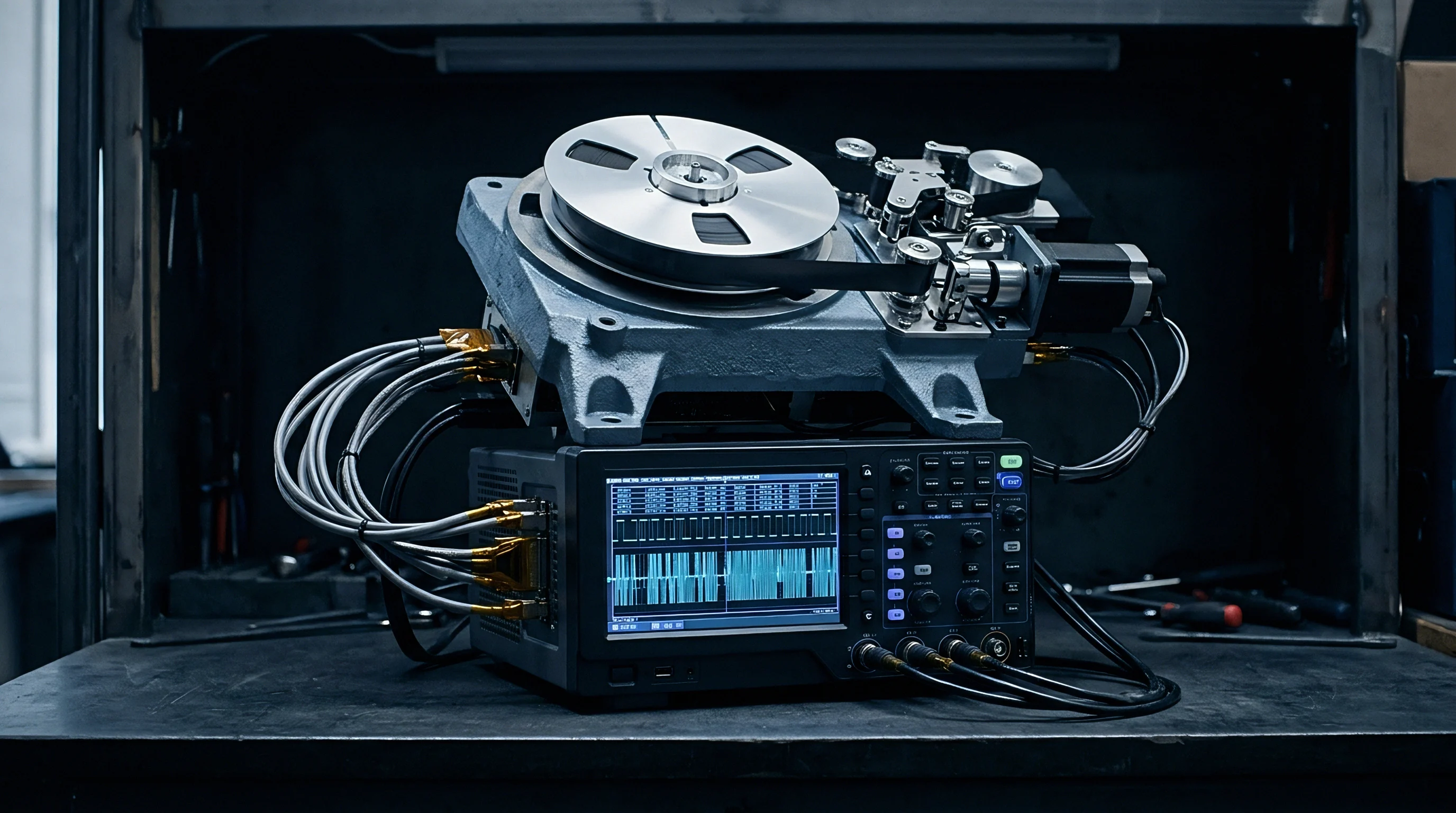
Payload Structure and Protocol Headers
Transport protocol selection determines whether overhead stays predictable or inflates during socket setup. Transmission Control Protocol adds handshakes, window acknowledgments, teardowns, and potential retransmissions on unstable radio links. Setting up a Transport Layer Security session over TCP requires several kilobytes of certificate exchange before telemetry data can move.
Opening a TCP socket to send twenty bytes and immediately closing it often burns over three kilobytes over the air; applying a ten-kilobyte rounding floor to that exchange drops effective protocol efficiency below one quarter of one percent.
Non-IP Data Delivery through Control Plane CIoT EPS Optimization bypasses standard IP header stacks altogether. Devices transmit raw user payloads directly inside Non-Access Stratum (NAS) messages routed to the Service Capability Exposure Function. By eliminating IPv4, IPv6, UDP, and TCP headers over the E-UTRA air interface, NIDD limits transmitted volume to the payload length plus brief NAS envelope headers, avoiding the usage inflation caused by header growth.
Non-IP Optimization and Encapsulation Overhead
Control-plane data transport bypasses traditional user-plane bearer setup, preventing Packet Gateways from generating standard IP-based charging data records. Operators bill NIDD transactions using event-based mechanisms priced per message rather than per megabyte. Choosing non-IP transport alters both the transceiver’s power budget and the underlying commercial structure of the SIM agreement.
- Data Assembly Application firmware constructs the raw telemetry packet inside module memory, keeping payload boundaries aligned with byte boundaries to minimize encapsulation expansion.
- Header Attachment Transport stacks append UDP or CoAP headers, expanding the initial sensor frame by twenty-eight to fifty-two bytes depending on IP address formatting choices.
- Context Activation Radio modems exchange Radio Resource Control messages with the eNodeB, establishing signaling radio bearers and user plane radio bearers across the cellular interface.
- Rounding Quantization Gateway billing nodes measure the combined packet burst upon link release, instantly inflating the recorded volume to the contractual minimum session increment.
Session rounding policies are structured to cover administrative and signaling overhead associated with core network context management, while session teardowns clear routing tables to free resources across wholesale cellular infrastructure.


Persistence
Maintaining an active network context allows embedded systems to transfer data without triggering session creation and teardown rounding penalties. Modems can enter deep sleep while preserving their IP address and bearer context inside the core network’s Mobility Management Entity. Power Savings Mode (PSM) enables LTE-M and NB-IoT modules to sleep for hundreds of hours without losing registration.
Upon waking, the module transmits immediately without running a full E-UTRAN attach procedure, bypassing context teardown charging triggers.
Preserving state requires balancing battery draw against rounding overhead. Power Savings Mode consumes under three microamps at three volts in efficient architectures, making context retention practical over long periods. Carrier firewalls, however, impose a counteracting limit: Network Address Translation (NAT) gateways drop dormant UDP port bindings after two to twenty-nine minutes.
To receive downlink commands without rebuilding sessions, devices must transmit periodic UDP keep-alive packets, spending energy to preserve the active mapping.

Are Continuous Socket Connections More Economical than Periodic Sessions?
Holding a continuous network context cuts billing overhead only if the energy needed for NAT keep-alives fits the device’s power budget. Sending a small UDP heartbeat every fifteen minutes keeps firewall ports open and prevents PDP context release triggers. At ninety total bytes per heartbeat, actual radio traffic reaches roughly two hundred fifty kilobytes per month.
Under a ten-kilobyte rounding tariff, an active socket billed volume stays at two hundred fifty kilobytes, whereas tearing down the connection four times a day under periodic wake cycles accumulates one thousand two hundred twenty-eight kilobytes of billed usage.
While hardware remains in low-power sleep between bursts, terminating the connection forces immediate session quantization.
The trade-offs change when wake cycles stretch to once or twice a day. A sensor waking every twenty-four hours to transmit fifty bytes incurs thirty ten-kilobyte rounding blocks a month, totaling three hundred kilobytes of billed data. Keeping a socket active over that same window requires ninety-six UDP keep-alives daily, generating over seven hundred kilobytes of over-the-air traffic.
For long sleep intervals, periodic teardowns prove more economical despite rounding penalties, assuming battery capacity can handle full attach sequences.

Timers and Context Lifecycle Triggers
Firmware manages network state through two main 3GPP timers: the periodic Tracking Area Update timer (T3412) and the Active Timer (T3324). T3324 governs how long the module stays in Discontinuous Reception or extended DRX after dropping its RRC connection before entering PSM. T3412 dictates the maximum sleep duration in PSM before the device must wake to send a Tracking Area Update signaling message to the MME.
- Inactivity Timer Expiry The serving gateway releases radio resources after detecting no user plane activity for a carrier-set period, usually five to ten seconds.
- NAT Binding Expiry Carrier firewalls drop dormant socket mappings, causing subsequent downlink packets to fail and forcing device-initiated socket recreation.
- MME Context Purge Mobility Management Entities clear stored subscriber state if a device fails to report within the negotiated T3412 window, mandating a full re-attach.
- Radio Link Failure Poor signal conditions force the modem to abort connected state operations, triggering ungraceful teardowns and immediate billing record creation.
Release Assistance Indication (RAI) in 3GPP Release 14 lets NB-IoT and LTE-M devices notify the eNodeB when no further data is expected. The base station releases the RRC connection immediately upon receiving the RAI flag, skipping the standard inactivity timer. While rapid release cuts transceiver active time and preserves battery, tariffs that treat RRC release as session termination will see billing costs rise due to immediate quantization on every burst.
How do carrier clearinghouses reconcile conflicting session state records when a roaming device transitions across multiple host networks within a single billing window?


Calculation
Calculating financial exposure from PDP context session rounding requires evaluating fleet size, transmission frequency, protocol choices, and carrier contracts together. Sourcing decisions focused solely on module price or flat monthly per-megabyte rates frequently collapse in commercial deployment. Examining a utility monitoring deployment illustrates how theoretical payload numbers diverge from landed data costs under real-world conditions.
Take a deployment of fifty thousand smart gas meters sending diagnostic telemetry twice a day. Each payload carries one hundred twenty bytes of binary sensor readings. Devices use an LTE-M module running UDP over IPv4.
Transport overhead adds twenty-eight bytes of IP and UDP headers, producing a physical over-the-air frame of one hundred forty-eight bytes per transmission.

Worked Telemetry Modeling for Smart Meter Fleets
Determining baseline data volume sets the absolute floor for fleet operations. Fifty thousand devices transmitting one hundred forty-eight bytes twice daily generate one hundred thousand transmissions per day. Physical radio traffic totals fourteen point eight megabytes daily, accumulating to four hundred forty-four megabytes across a thirty-day billing month for the entire deployment.
Scenario One applies a standard tier-one operator tariff with a ten-kilobyte session rounding increment on every RRC release. To preserve battery life over a fifteen-year target, firmware executes a wake, attach, transmit, and immediate disconnect sequence. Each one-hundred-forty-eight-byte payload triggers a ten-kilobyte (10,240 byte) allocation at the gateway.
Daily billed volume reaches one point zero two four gigabytes, bringing monthly billed usage to thirty point seven two gigabytes as rounding penalizes frequent reconnections.
Scenario Two models the fleet under a wholesale roaming agreement with a hundred-kilobyte rounding minimum per context release. The physical transmission stays at one hundred forty-eight bytes, but each event logs a hundred-kilobyte (102,400 byte) allocation on the clearinghouse ledger. Daily billed usage jumps to ten point two four gigabytes, pushing monthly billable volume to three hundred seven point two gigabytes as inactive sockets close after timeout.
Scenario Three models a persistent connection strategy using Power Savings Mode and UDP socket retention. Devices send a forty-byte UDP keep-alive ping every twenty minutes to hold NAT firewall bindings open, alongside two daily telemetry reports. Transmissions per device total seventy-four events daily (seventy-two keep-alives plus two reports).
Because the PDP context remains active in the core network, session rounding does not apply to individual transactions. Each keep-alive uses sixty-eight bytes over the air, while telemetry reports consume one hundred forty-eight bytes. Daily physical volume per device equals five thousand Diluted bytes (4,896 bytes for keep-alives + 296 bytes for telemetry), bringing daily fleet volume to two hundred forty-four point eight megabytes and monthly billed usage to seven point three four gigabytes.
Retaining an active network context reduces overall financial billing volume whenever wake cycles occur more frequently than the network NAT timeout threshold.
| Operational Scenario | Monthly Raw Data Volume | Monthly Billed Data Volume | Effective Billing Multiplier | Annual Landed Cost at $12/GB Base Rate |
|---|---|---|---|---|
| Baseline Physical Overhead (No Rounding) | 0.444 Gigabytes | 0.444 Gigabytes | 1.0x | $63.94 |
| 1 KB Session Rounding Tier | 0.444 Gigabytes | 3.072 Gigabytes | 6.9x | $442.37 |
| 10 KB Session Rounding Tier | 0.444 Gigabytes | 30.720 Gigabytes | 69.2x | $4,423.68 |
| 100 KB Session Rounding Tier | 0.444 Gigabytes | 307.200 Gigabytes | 691.9x | $44,236.80 |
| Persistent Socket with 20-min Keep-Alive | 7.344 Gigabytes | 7.344 Gigabytes | 16.5x | $1,057.54 |
| Calculations assume 50,000 devices transmitting 148-byte packets twice daily over 360 operational days. Standard carrier base rate fixed at $12.00 per Gigabyte across all volume tiers for comparative normalization. | ||||

Financial Impact across Variable Tariff Structures
Comparing landed costs across rounding regimes illustrates the main risk in low-power IoT procurement. Moving from a ten-kilobyte to a hundred-kilobyte rounding tariff increases data expense tenfold without adding any operational value. Persistent socket maintenance incurs just over one thousand dollars in annual data charges, whereas teardown strategies under aggressive rounding tiers escalate costs exponentially.
- Context Behavior Auditing Hardware engineering teams verify modem session persistence logs using AT command trace tools and inline current consumption monitors during qualification testing.
- Carrier Contract Alignment Procurement teams incorporate explicit session rounding clauses, daily usage aggregation caps, or NIDD pricing models into master service agreement negotiations.
- Firmware Architecture Optimization Software developers implement dynamic keep-alive scheduling that adapts socket management based on measured network NAT expiration thresholds.
Standard master service agreements incorporate clause 4.2 of GSMA PRD AA.13, authorizing operators to round individual Data Detail Records to negotiated volume blocks prior to invoicing, where service level agreement terms govern final charges while frequent reconnects increase power draw.


Clause
Commercial contracts for cellular IoT deployments rely on technical billing terms that determine how raw gateway traffic turns into financial liabilities. Sourcing managers often focus on baseline per-megabyte pricing while overlooking rounding rules tucked into tariff annexes. Securing favorable aggregation terms delivers significantly higher savings than chasing minor discounts on high-tier volume brackets.
Roaming clearinghouses handle international M2M traffic using Transferred Account Procedures TAP3 or Billing and Charging Evolution (BCE) standards. Legacy TAP3 rules require host networks to generate discrete records for every session event and pass rounded totals to the home operator. Modern BCE specifications support granular event-based billing and stream aggregation, allowing roaming sponsors to eliminate per-session quantization penalties across international partner networks.

Roaming Clearinghouse Aggregation Rules
Clearinghouses process billions of records daily, applying carrier-specific rating rules before issuing settlement invoices to wholesale sponsors. When a device roams onto a foreign network, the host operator’s local charging rules take over. If that network closes records every two hours or on cell handoffs, the device incurs multiple rounding events even if its core PDP context stays active continuous from the device standpoint.
Master service contracts need to define whether rounding occurs per Call Detail Record, as a daily subscriber aggregate, or across the monthly pool. Enterprise buyers that secure daily aggregate rounding pay for actual bytes transferred plus a single daily rounding increment per SIM, largely insulating themselves from the cost of frequent wake cycles.
Carrier billing engines execute aggregation rules at the serving gateway level, independent of firmware session state.

Negotiating Custom Access Point Master Agreements
Custom Access Point Name (APN) configurations allow enterprise customers to set specific gateway behaviors and routing parameters. During setup, engineering teams can negotiate custom charging trigger profiles on the Packet Gateway. Disabling volume- and time-based record generation on private APNs keeps charging records open as long as the device maintains an active IP context.
Enterprise procurement teams negotiating multi-year IoT contracts protect margins by establishing daily billing aggregation floors across all active SIM profiles.