Validating Embedded Transmitter Approvals during Host Entry Audits
Host entry audits validate embedded transmitter grants by cross-referencing host antenna gain, spurious radiation reports, and local regulatory filings.


Dock
Customs gates hold unverified shipments. Containerized industrial devices equipped with integrated radio modules face physical cross-examination at international freight terminals before market clearance occurs. Border authorities inspect incoming electronic hardware against localized radio frequency compliance registries, pulling random samples from palleted cargo to audit regulatory filings.
When an embedded radio module within a host device relies on a pre-existing modular grant, entry inspectors verify that the completed end product remains strictly within the original modular grant parameters. A mismatch between the module’s modular grant condition sheet and the final host assembly leads to immediate cargo hold orders.

Boundary Breakdown at Import Inspection
Discrepancies appear when host integrators treat a pre-certified radio module as an automatically compliant subassembly. Radio grants carry explicit limits. A full modular approval granted under FCC Part 15.247 or ISED RSS-247 dictates precise restrictions regarding power limits, trace antenna design, human exposure separation distances, and co-located transmitter arrangements.
When an integrator mounts a certified Wi-Fi or cellular module inside an industrial enclosure, the physical surrounding metal, power supply noise, and alternative antenna selection change the device’s electromagnetic behavior.
Audit failures at customs ports stem from three recurring integration omissions. Integrators change trace layout paths between the RF pin and the external connector without submitting a Class II Permissive Change. Integrators replace approved antenna models with higher-gain alternatives that exceed the maximum equivalent isotropically radiated power specified in the original grant dossier.
Integrators combine multiple modular transmitters within a single chassis with less than twenty centimeters of physical separation without executing co-location evaluation routines.
A host enclosure incorporating an intentional radiator operating at 2.4 GHz experiences an average attenuation loss of 3.2 dB when transitioning from a plastic housing to a metallic chassis with slots.

Host Entry Verification Mechanics
Auditors pull the technical documentation package at the physical receiving site. The regulatory audit cross-references the visible module serial markings with the registered FCC ID, CE Declaration of Conformity, Giteki mark designation, or SRRC certificate number in national compliance databases. Discrepancies between the underlying grant documents and the product physical construction invalidate the importation declaration.
Importers bear complete regulatory liability. The table below details the typical failure modes that trigger administrative seizures during incoming host product audits.
- Unapproved Antenna Swaps replacing a certified dipole antenna with an high-gain panel antenna changes the directional beam patterns and pushes peak radiated power beyond regulatory band edge limits.
- Trace Layout Alterations modifying the microstrip RF feed lines on the host motherboard shifts impedance away from fifty ohms, creating unwanted harmonic emissions that violate field strength thresholds.
- Co-Located Radio Coupling placing Bluetooth and Wi-Fi modules within fifteen centimeters of an active cellular modem generates intermodulation products that degrade overall band noise profiles.
- Host Enclosure Noise Injection unshielded switching power supplies inside the main terminal emit broadband conducted noise that couples into the transmitter power lines, corrupting occupied bandwidth.
When an import audit uncovers an invalid modular grant implementation, market entry stops completely. The port authority issues a formal compliance query, requiring the importer of record to supply full chamber test reports within fifteen business days or face mandatory re-exportation of the entire freight lot.


Permit
Regulatory authorization across major industrial markets operates under distinct legal frameworks. Securing approval for an embedded radio module in one region does not grant automatic entry into adjacent economic zones. Global host entry demands explicit mapping of individual market requirements against the integrated device physical design.

Jurisdictional Scope and Modular Conditions
Different regional authorities impose varying procedural duties on host product manufacturers using pre-approved radio modules. The Federal Communications Commission under KDB 996369 D04 mandates host verification testing to demonstrate that host internal circuitry does not generate illegal unwanted emissions. The European Union under the Radio Equipment Directive 2014/53/EU holds the final host assembler entirely responsible for full system compliance under applicable harmonized standards including ETSI EN 300 328 and EN 301 489.
In Asian markets, authorization boundaries are tightly strictly defined. China’s State Radio Regulatory Commission requires module-level re-testing if the host application alters antenna configuration or operational frequency bands. Japan’s Ministry of Internal Affairs and Communications enforces strict construction type approvals where host modifications alter the physical RF shielding of the certified radio unit.
| Jurisdiction | Regulatory Authority | Primary Standard | Modular Grant Transferability | Host Test Requirement |
|---|---|---|---|---|
| United States | FCC | Part 15C / KDB 996369 | Conditional on grant rules | Radiated spurious verification |
| European Union | EU RED Council | EN 300 328 / EN 301 489 | Full host responsibility | System DoC and spot checks |
| China | SRRC | Radio Regulation Rule | Strict antenna gain limits | In-country host re-testing |
| Japan | MIC / Giteki | Article 2 Paragraph 1 | Shielding bound | Construction verification |
| South Korea | RRA / KC | KN 301 489 / Radio Act | Limited module transfer | EMC host evaluation |

Filing Clocks across Regulatory Regimes
Lead times vary significantly across target markets. Importers planning synchronized international launches balance test sample counts, chamber bookings, and local representation constraints. Filing clocks dictate delivery schedules.
- Grant Scope Review analyzing the modular certification test report to map maximum permissible antenna gains, power settings, and shielding configurations across target regions.
- Host Spot Testing executing radiated spurious emission pre-scans inside an accredited anechoic chamber to confirm host noise sources do not compromise modular limits.
- Permissive Change Filing submitting Class II Permissive Change documentation or local equivalent filings when host antenna gain or enclosure proximity exceeds original grant boundaries.
- Local Agent Attestation obtaining mandatory local legal representative signatures and submitting technical dossiers to regional spectrum management authorities.
ETSI EN 300 328 Clause 4.3.2.2 limits maximum effective isotropically radiated power to 20 dBm, causing host units with non-compliant antenna gain additions to face immediate port rejections.
Certificates expire without warning when underlying harmonized standards undergo mandatory technical updates. The importer remains legally accountable under standard compliance indemnity terms specified in global purchasing contracts, which stipulate that unapproved subassembly modifications shift all financial losses directly onto the contract manufacturer.


Probe
Physical measurement in an anechoic environment supplies the final proof of compliance. Radio frequency energy radiates unpredictably when constrained inside metallic or dense composite host enclosures. Chamber scans convert theoretical compliance assumptions into physical measurement data.

Can Antenna Gain Changes Invalidate Modular Approval Scope?
Antennas alter field distribution profiles. Substituting the factory-approved trace antenna with an external omnidirectional whip antenna changes both peak gain and spatial radiation geometry. Standard modular grants specify maximum allowed antenna gains for each operating band.
Exceeding these figures alters the effective isotropically radiated power, breaching statutory field strength boundaries.
When measuring host assemblies on an automated turntable, test engineers turn the unit through 360 degrees while sweeping receiver frequencies from 30 MHz up to the tenth harmonic of the fundamental carrier. The turntable height adjusts between one and four meters to capture peak signal reflections. If the measured field strength exceeds the limit lines defined in FCC Part 15.209 or ETSI EN 300 328, the host fails the entry gate audit.
| Enclosure Material | RF Shielding Efficiency (dB) | Spurious Shift (MHz) | Margin to Limit Line (dB) | Audit Status |
|---|---|---|---|---|
| ABS Plastic | 0 to 2 | 0 | +6.2 | Compliant |
| Aluminum Die-Cast | 35 to 50 | +12.4 | -1.8 | Non-Compliant |
| Polycarbonate with Vents | 5 to 12 | -4.1 | +2.4 | Marginal |
| Carbon Fiber Composite | 18 to 28 | +8.7 | +0.5 | At-Risk |

Radiated Spurious Emissions in Enclosed Housings
Metal housings reflect radiated energy. Switching power converters, high-speed display buses, and system microprocessors generate high-frequency digital noise inside the device chassis. Internal reflections focus this unwanted broadband noise directly into the radio module antenna port, producing high-level spurious emissions.
Data sheets omit actual margins. Chamber engineers identify non-compliant radiation sources using near-field magnetic probes before placing the complete host on the turntable. The technical file must contain comprehensive physical evidence detailing the operating conditions during test execution.
- Antenna Gain Calculations clear mathematical derivations proving that the total systemic gain remains equal to or below the certified modular limit.
- Radiated Emission Plots complete spectral sweeps capturing emissions from 30 MHz to 26.5 GHz with peak and average detector traces clear of limit lines.
- Firmware Version Hash exact identification of the operational firmware image forced during testing to lock radio transmission at maximum duty cycle.
- Co-Location Power Table calculations demonstrating that total simultaneous RF exposure compliance satisfies localized safety field limits.
Suppliers routinely attempt to excuse non-compliant chamber scans by claiming that elevated noise spikes represent transient digital activity from non-radio peripheral components rather than intentional transmitter harmonics. This explanation fails during regulatory audits because entry laws hold the host system liable for all radiated energy escaping the enclosure, regardless of internal circuit origin.


Trace
Documentary consistency forms the second line of defense during entry gate inspections. Technical dossiers accompanying imported host electronics must align precisely with registered approval databases. Missing test reports, outdated declarations, or illegible serial plates trigger administrative holds at entry ports.

Dossier Alignment and Technical Construction Files
Customs agencies compare the physical product mark with the technical construction file. A valid compliance package includes the original modular grant, the host integration manual, host verification test reports, and the signed EU Declaration of Conformity or regional equivalency certificates. A single gap in this chain of custody invalidates the entry paperwork.
Testing errors delay market entry. The compliance matrix below establishes the mapping required between physical host features and official dossier components.
| Host Hardware Element | Required Entry Document | Audit Validation Check | Regulatory Impact |
|---|---|---|---|
| Embedded Radio Module | Original Modular Grant Certificate | FCC ID / Certificate number match | Mandatory for entry |
| External RF Antenna | Antenna Specification Sheet | Peak gain comparison against grant | Rejection if gain exceeded |
| Host Motherboard | Host EMI Test Report | Part 15B / EN 301 489 compliance | Required for system DoC |
| System Firmware | Software Security Attestation | RF parameter lock confirmation | Protects radio boundaries |

Labeling and Mark Integrity Verification
Paperwork gaps halt entry customs. The external housing of the host device must clearly display regulatory identification symbols. Under FCC rules, if the embedded module’s FCC ID is not visible when installed inside the host, the host exterior must display a permanent label stating Contains FCC ID followed by the module identifier.
Customs inspectors verify electronic labels against regional radio databases before clearing containerized host electronics.
Electronic labeling provides an alternative for host devices featuring integrated display screens. The user manual must provide clear instructions detailing how to access the regulatory menu. Audit personnel test this user interface flow during physical inspections.
- Boot the host terminal and navigate to the system configuration menu.
- Select the regulatory information submenu item using system navigation controls.
- Verify that the displayed FCC ID, IC ID, CE mark, and Giteki numbers match the shipping manifest.
- Confirm that e-label access instructions appear clearly inside the printed quick-start guide accompanying the product package.
This raises an essential operational question: how can host importers maintain continuous dossier traceability when module vendors modify internal component bill of materials without updating product revision letters?


Bond
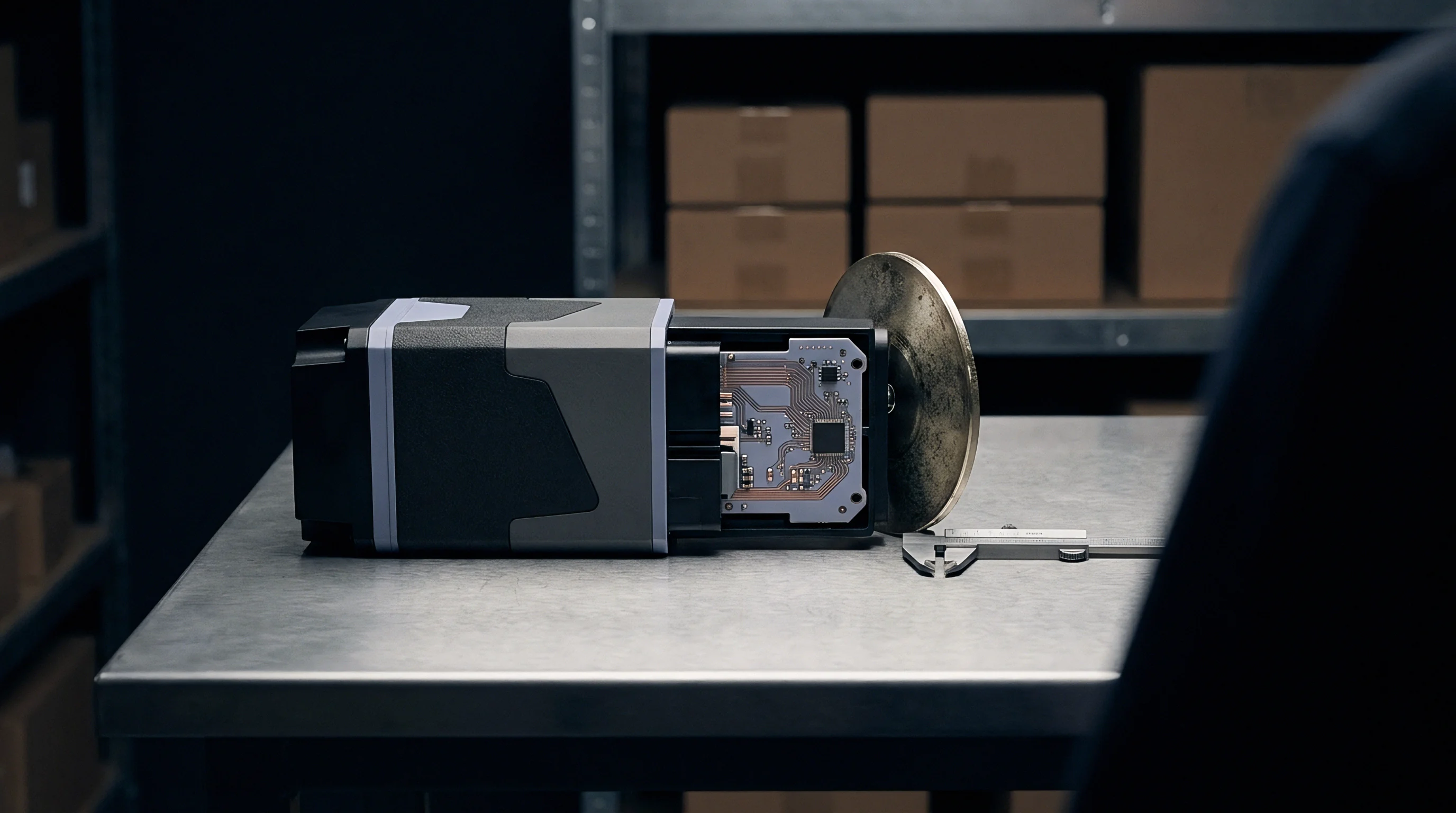
Commercial failure during host entry audits carries immediate financial penalties. Unapproved modifications terminate host access. When a container shipment is detained at a port of entry due to invalid radio approvals, demurrage charges, warehouse fees, and re-testing expenditures accumulate daily on the importer balance sheet.
Financial Exposure and Retest Arithmetic
Chamber time consumes project capital. Retesting a host device inside an accredited three-meter or ten-meter anechoic chamber costs between two thousand and four thousand dollars per eight-hour shift. If an entry audit uncovers elevated radiated emissions requiring physical enclosure redesign or shielding retrofit, the overall correction cycle adds four to eight weeks to the launch schedule.
Local agents sign legal declarations. Importers must budget for the full financial burden of entry delays. A typical cargo hold involving two thousand host terminals generates storage costs of five hundred dollars per day, rapidly exceeding the initial compliance budget spent on pre-import verification testing.
Module grants extend only to the exact PCB trace layout and enclosure clearance specified inside the original certification filing.

Contractual Risk Allocation for Non-Compliant Shipments
Purchasing agreements between host brands and original design manufacturers must contain explicit regulatory warranty clauses. Procurement teams insert compliance covenants specifying that the subassembly vendor assumes full financial indemnity for shipment rejections caused by invalid modular grants, unannounced component substitutions, or missing grant filing documentation.
Incompatible gains trigger rejection orders. Sound commercial governance dictates that final supplier payment releases depend on physical customs clearance proof rather than preliminary factory acceptance certificates.
Verification before shipment remains the absolute commercial boundary between predictable global distribution and catastrophic freight impoundment.