Meaning
Performance metrics quantify the sum of all radio frequency energy that an antenna system emits into the surrounding space. Unlike a single-point measurement, total radiated power accounts for the entire three-dimensional radiation pattern. This value is used by network operators to predict the coverage and performance of a device in a real-world environment.
Spherical Integration
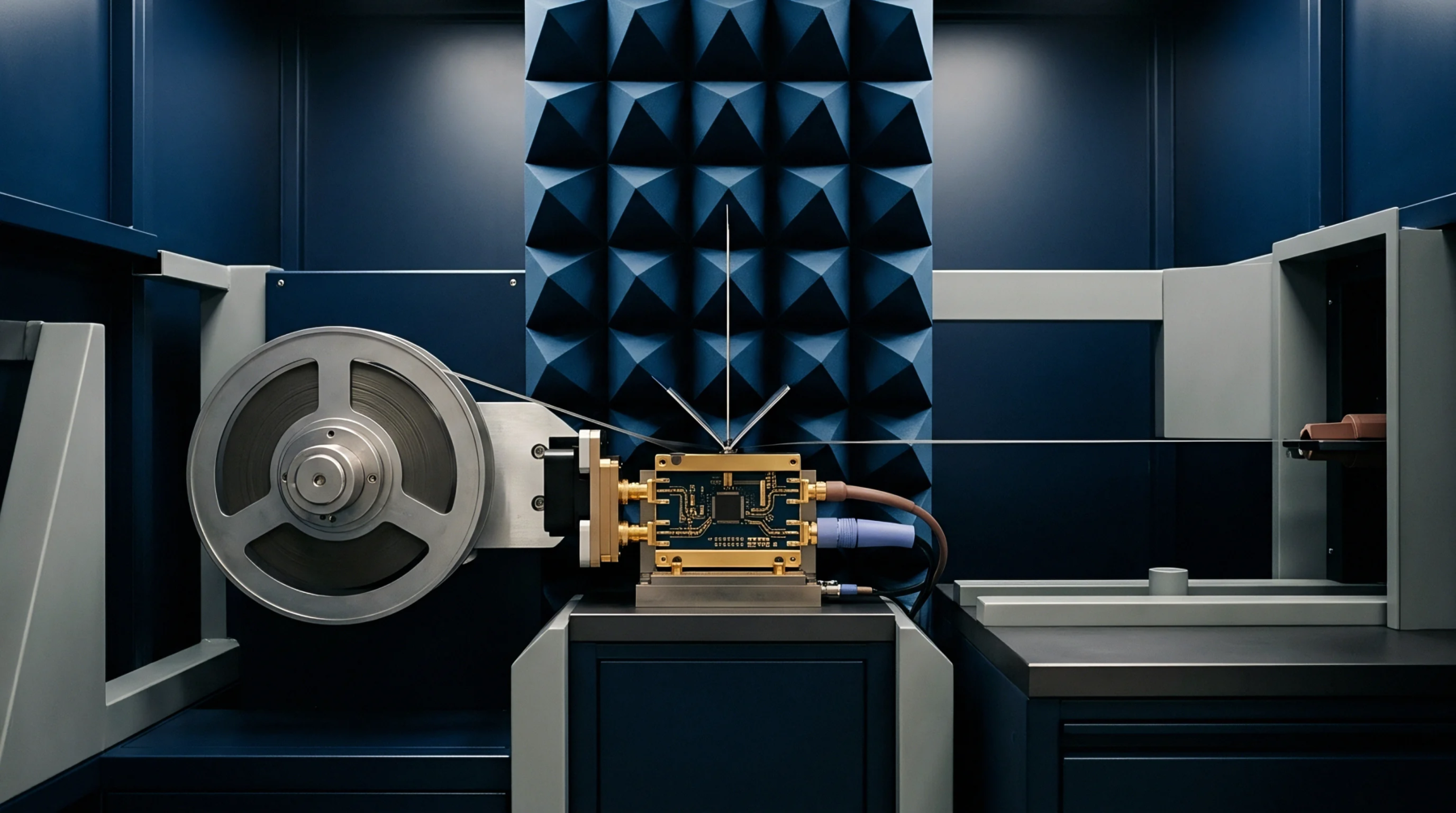
Laboratory measurements involve taking power readings at hundreds of points around the device in an anechoic chamber. These individual values are then mathematically combined to find the total energy output. This process eliminates the bias that occurs if a device has a strong signal in one direction but is weak in others.
A complete scan provides a realistic view of how the device will perform when held at different angles.
Path Loss
Calculations for link budgets use the radiated power as the starting point for determining the maximum distance a signal can travel. Knowing the total energy allows engineers to account for the absorption and reflection that will occur in the environment.
Emission Efficiency
Ratio comparisons between the conducted power at the antenna port and the total power radiated show how much energy is lost within the antenna itself. A highly efficient antenna will radiate almost all the power it receives.